GE HealthCare's feeding tube AI gets pediatric FDA clearance
GE HealthCare received FDA 510(k) clearance on Nov. 17 for Critical Care Suite 3.0, extending its on-device feeding tube detection AI to pediatric patients for the first time — at 99.2% sensitivity, running directly on mobile X-ray units with no cloud connection required.

What FDA cleared
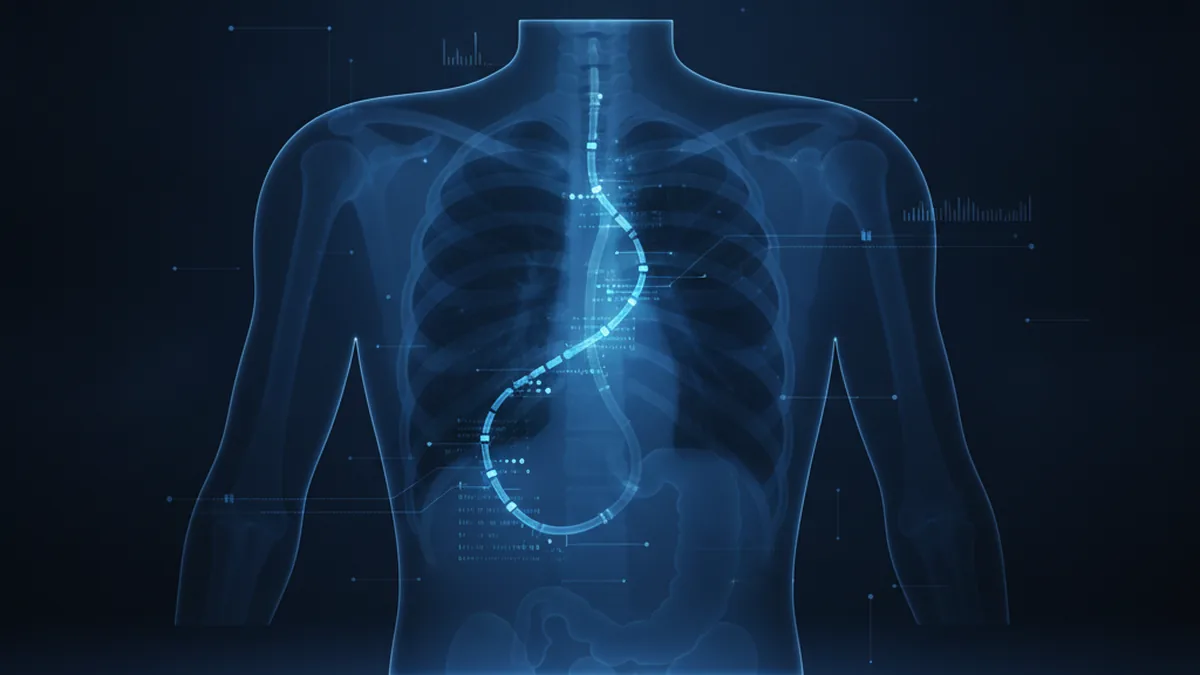
GE HealthCare announced FDA 510(k) clearance on Nov. 17 for Critical Care Suite 3.0, an AI software package that runs directly on mobile X-ray devices to detect enteric feeding tubes and flag their tip and side-port position at the bedside, Respiratory Therapy reported. The clearance extends the algorithm to pediatric patients for the first time (it previously covered adults only), and the company says the model demonstrated 99.2% sensitivity for tube detection with a 91.6% mean DICE score against expert radiologist annotations, according to GE HealthCare's own release.
Why it matters at the bedside
The software highlights the tube path, tip, side port, airways and diaphragm directly on the X-ray image, giving clinicians a fast visual read without waiting on a radiologist or a cloud round-trip. "Critical care teams need to make timely clinical decisions in complex, rapidly changing environments when every minute counts," said Larry Boyd, VP and General Manager of Global X-ray at GE HealthCare. Roughly 80% of ICU patients receive enteral nutrition through a nasogastric or nasoenteric tube, and a misplaced tube, one that ends up in the airway instead of the stomach, is a recognized source of serious complications in critical care.
The engineering gap behind the clearance
That's the pattern worth noticing here: the clinical model itself (tube detection on X-ray) isn't new, but shipping it as an on-device feature that works offline, at the bedside, inside an existing imaging workflow, is where most of the engineering difficulty actually lives. A capable AI model is necessary but not sufficient. Pairing it with a team that can integrate AI models into regulated clinical software end to end, from inference pipeline to the UI a technologist actually uses under time pressure, is what turns a good algorithm into a device clinicians trust.
Why on-device inference matters for critical care AI
Embedding the model on the imaging hardware, rather than routing images to a server, trades off against a tighter engineering constraint: on-device deployment caps how large the model can be and how often it can be updated, since every version has to fit and run inside the X-ray unit's own compute budget. GE HealthCare's choice to accept that constraint, rather than shipping a cloud-hosted version with more headroom, reflects a broader shift in clinical AI toward edge deployment for assessments where connectivity can't be assumed and a network outage shouldn't be able to take a safety check offline.
What the pediatric expansion signals for clearance strategy
Extending an already-cleared adult algorithm to pediatric patients, rather than clearing both populations at once, is a deliberate sequencing choice: validate the model and the on-device deployment path on the larger adult population first, then file a second 510(k) once there's a track record to point to. It's the same staged-clearance logic seen across recent imaging AI submissions: ship a narrower, well-evidenced claim first, and expand scope once the product has real-world performance data behind it, rather than trying to clear every population and use case in one submission cycle.
Building AI into a clinical imaging or device workflow? Epica integrates AI models into regulated clinical software end to end. Talk to us →
Building regulated clinical software?
From EHR integration to agentic workflows, we build the software layer that holds up under real hospital IT constraints.